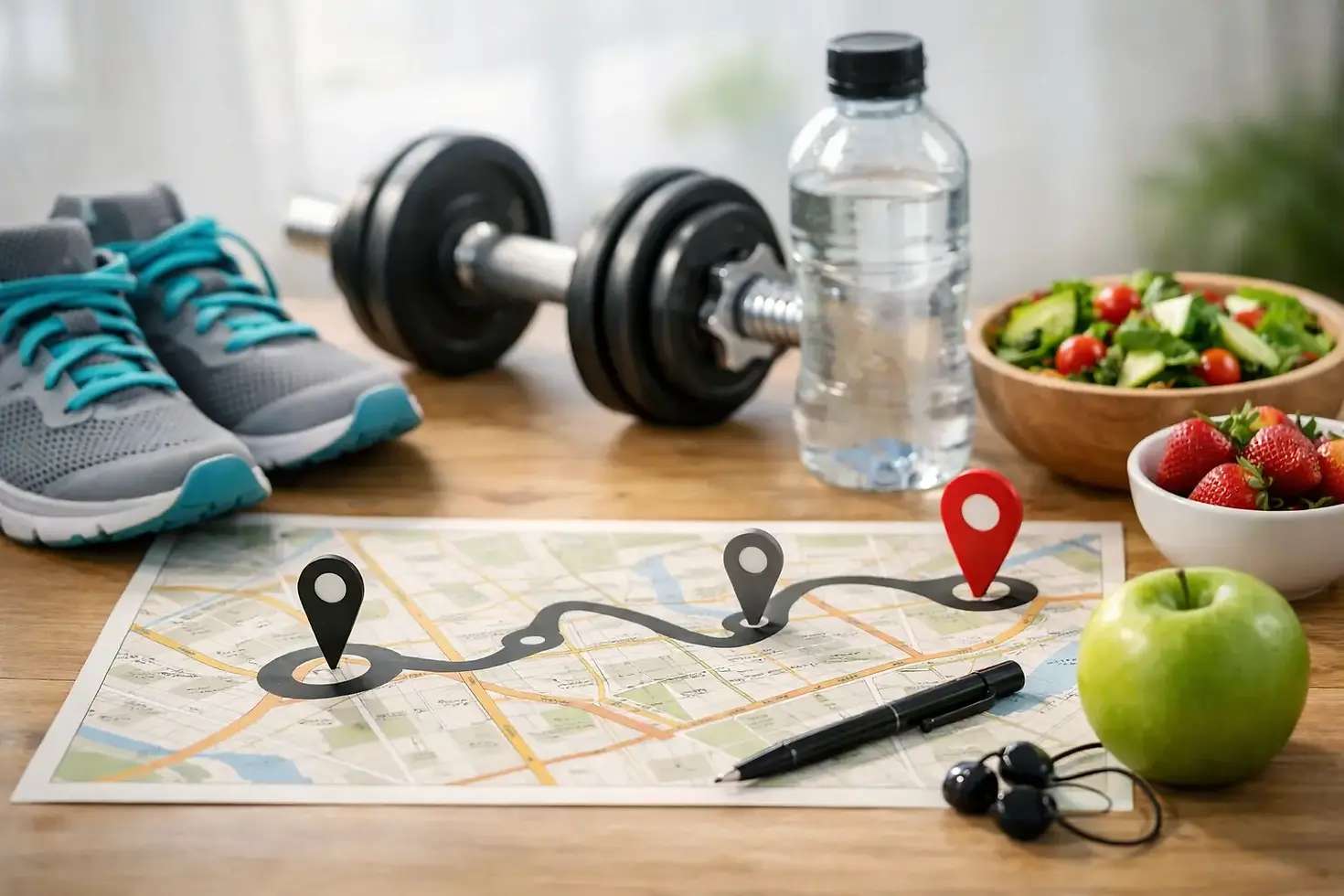
Fitness Roadmap for Beginners That Works

You do not need a perfect plan, a full free calendar, or a sudden burst of motivation to get in shape. You need a fitness roadmap for beginners that makes sense for real life - work, kids, stress, bad sleep, busy weeks, and all. That is where most people get stuck. They try to “be better” instead of following a clear path.
If you have started and stopped before, that does not mean you lack discipline. More often, it means you were given workouts without a system. Random effort can make you sore. It rarely makes you consistent. And consistency is what changes your body, your energy, and how you feel walking through daily life.
What a fitness roadmap for beginners should actually do
A good plan should lower the mental load, not add to it. You should know what to do this week, what progress looks like, and how to adjust when life gets messy. If your plan depends on being highly motivated every day, it is not a good plan.
Beginners often think they need extreme workouts to see results. They do not. They need the right amount of training, done often enough, with enough recovery to keep going. That is a very different approach from going all-in for ten days and then disappearing for three weeks.
The goal is not to win fitness for a month. The goal is to build life capacity - more energy, better strength, better movement, more confidence, and a body that supports your day instead of slowing it down.
Start with your real baseline, not your ideal self
Most people make the same mistake at the beginning. They build a plan for the version of themselves who wakes up early, meal preps on Sunday, never misses a workout, and loves exercise. That person is imaginary.
Start with your real baseline. How many days can you honestly train right now? How much sleep are you getting? Are you dealing with joint pain, stress, or a work schedule that changes every week? Can you walk for 20 minutes without feeling drained, or are you starting lower than that?
There is no shame in the answer. There is only useful information.
A realistic starting point might be two strength sessions per week, daily walking, and one simple nutrition target. That may not sound flashy, but it is enough to create momentum. Once momentum is there, progress gets easier to build.
The three-part roadmap: training, nutrition, recovery
A beginner plan works best when it focuses on the few things that move results forward. That usually means training, nutrition, and recovery. Ignore one of those, and progress gets harder.
Training: keep it simple enough to repeat
For most beginners, strength training is the anchor. It helps you build muscle, protect joints, improve metabolism, and feel more capable in everyday tasks. It also gives you measurable wins. You can track reps, weight, and how movements feel over time.
Two to three full-body sessions per week is a strong starting point. That is enough to improve without burying you in soreness. Each session should include basic movement patterns like squatting, hinging, pushing, pulling, carrying, and core work. You do not need fancy exercises. You need good coaching, solid form, and gradual progress.
Cardio matters too, but it does not need to be punishment. Walking is one of the best starting tools available. It improves conditioning, supports recovery, helps with stress, and is easy to fit into a normal schedule. For some people, cycling or low-impact machines may feel better than jogging, especially if joints are sensitive or body weight is higher.
The trade-off is simple: harder is not always better. Harder can feel productive, but if it leaves you exhausted, inconsistent, or injured, it slows you down.
Nutrition: build a few wins first
Most beginners do not need a complicated diet. They need a way of eating they can stick with on weekdays, weekends, and stressful days. The best nutrition plan is the one that improves your choices without turning every meal into a math problem.
Start with a few non-negotiables. Eat enough protein to support recovery and muscle retention. Include fruits or vegetables regularly. Drink more water. Reduce the habits that quietly add up, like grazing all afternoon or turning every stressful day into a takeout day.
If fat loss is a goal, you will need a calorie deficit over time. That part is real. But aggressive restriction often backfires for beginners because it increases cravings, drains energy, and makes workouts feel miserable. A moderate, steady approach usually works better.
For some people, tracking food for a short period helps build awareness. For others, it becomes overwhelming. It depends on your personality, stress level, and history with dieting. The key is choosing a method you can maintain long enough to learn from it.
Recovery: the part people skip and then wonder why they stall
Sleep, stress, and recovery habits are not extras. They shape your results. Poor sleep makes hunger harder to manage, workouts feel worse, and recovery slower. High stress can push people into an all-or-nothing cycle where one rough day turns into a rough week.
That does not mean your life has to be calm before you can succeed. It means your plan should respect reality. If you are sleeping six hours and juggling work and family, your program should be built around that. Good coaching meets you where you are and helps you improve from there.
Your first 8 weeks: what progress should look like
A beginner roadmap should create quick wins, but not fake ones. You may lose some weight in the first month, but that is not the only marker that matters. Better energy, less stiffness, improved sleep, stronger workouts, more stable eating habits, and a better mood all count as progress.
In the first two weeks, the win is showing up. You are learning the routine, practicing movements, and proving to yourself that fitness can fit into your life.
By weeks three and four, many people notice they are recovering better and feeling less intimidated. Workouts start to feel more familiar. Walking gets easier. Hunger may feel more stable if nutrition improves.
By weeks five through eight, you want to see measurable change. That might mean more reps, more weight, better movement quality, inches lost, or clothes fitting differently. Not every week will feel dramatic. That is normal. Real progress often looks boring while it is happening.
Common beginner mistakes that slow everything down
The biggest mistake is doing too much too soon. Five workouts a week sounds impressive until your schedule collapses. A smaller plan you can repeat beats a perfect-looking plan you cannot sustain.
Another mistake is changing the plan every week. If you keep bouncing between classes, apps, challenges, and YouTube workouts, it is hard to know what is working. Structure gives your body time to adapt.
Many beginners also rely on motivation as if it is a schedule. Motivation is helpful, but it is unreliable. Systems matter more. Set workout times. Prep simple meals. Keep backup options ready for busy days. Remove decisions where you can.
And finally, do not judge your start against someone else’s middle. Comparing yourself to fitter people can make you feel behind when you are actually right on time.
Why coaching changes the game
A lot of people do not fail because they are lazy. They fail because they are trying to solve too many problems at once with too little guidance. They need structure, accountability, and someone to adjust the plan when life happens.
That is why a coaching-first approach works so well for beginners. It replaces guesswork with a process. It gives you feedback when your form is off, support when your motivation dips, and a clear next step when progress slows.
At Next Level Gym Results, that kind of support is the point. Real people get real results when they stop trying to figure everything out alone and start following a system that fits their actual life.
The best fitness roadmap for beginners is one you can live with
There is no single perfect beginner plan. A parent with two young kids may need short, efficient training sessions. A desk worker with back pain may need extra focus on movement quality and core strength. Someone coming back after years away may need to rebuild confidence before intensity.
What matters is that your roadmap is clear, realistic, and progressive. You should know what you are doing this week, why it matters, and what comes next. That clarity builds confidence. Confidence builds consistency. And consistency is what gets results.
Start smaller than your ego wants to. Give your plan enough time to work. Let boring basics do their job. A stronger body, better energy, and more confidence are not built through random effort. They are built through a clear path you can keep following, even on normal, imperfect days.



Comments